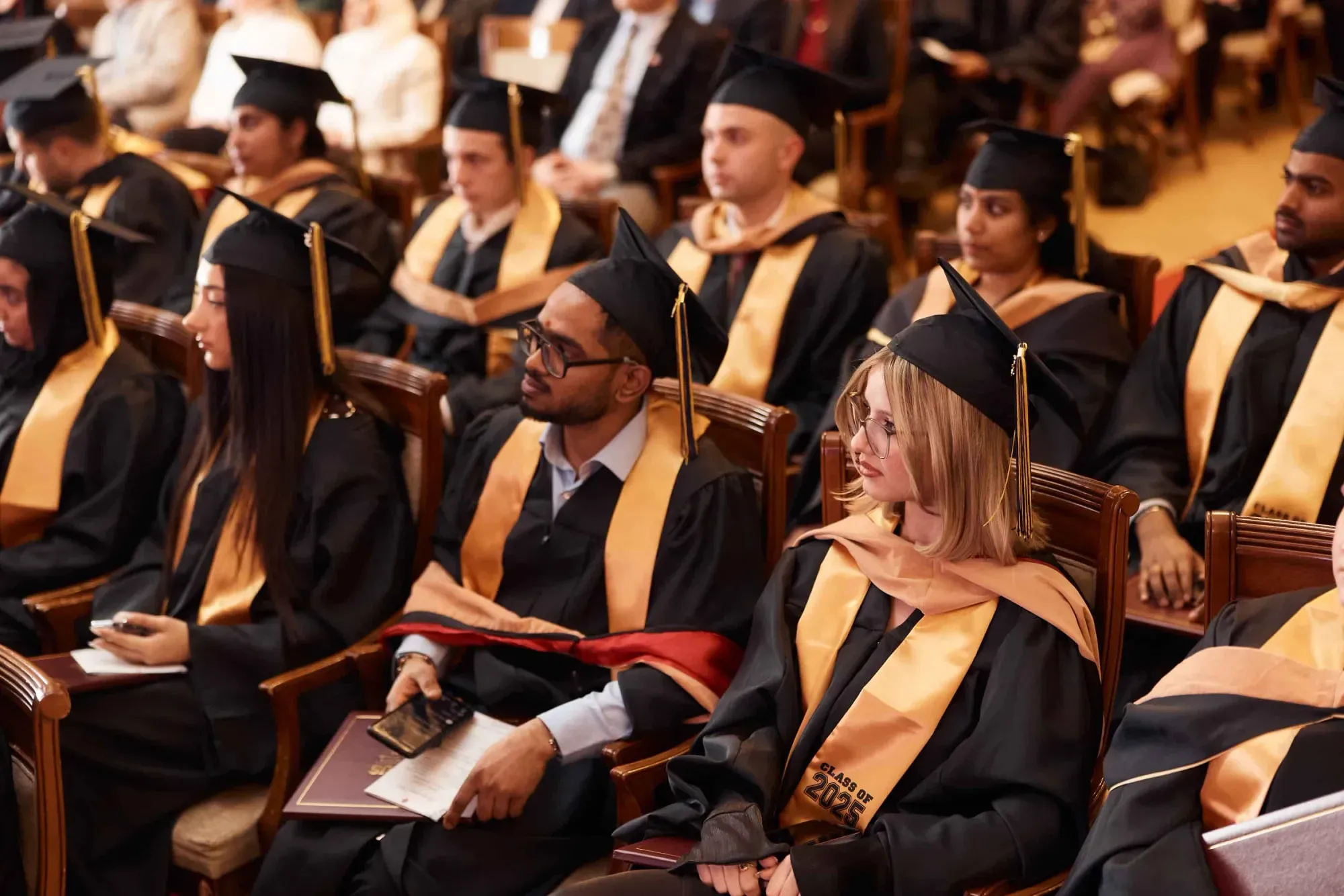
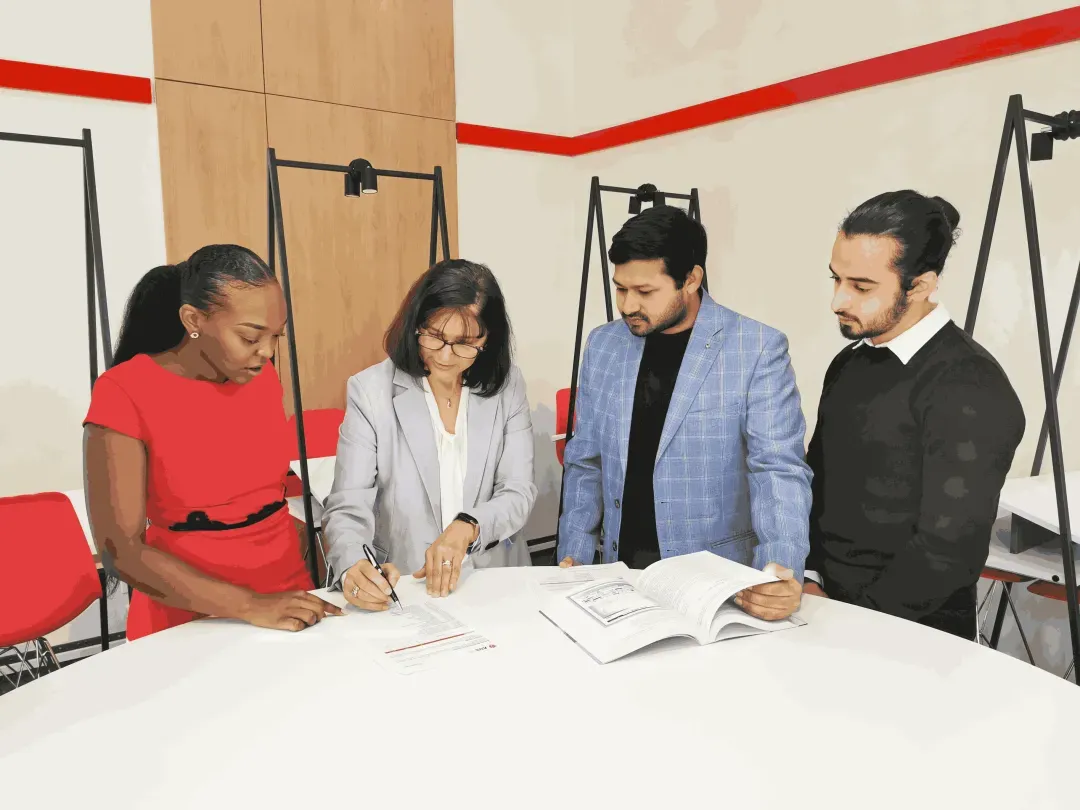
Every course is built around real organizational problems. Students leave with a portfolio of decisions they made, not just a transcript of lectures they attended, prepared to lead from day one rather than catch up.
04 In Numbers
“A prestigious, well-known institution that attracts students and faculty from all over the world.”
30+Years combining Swiss and American education traditionsAUS institutional records, 2026
80%+Of graduates say their role relates to their AUS studiesAlumni outcomes survey, 2025
40+Nationalities on campusAUS Registrar, Fall 2026
20Maximum students per classAcademic policy, 2026
1:7faculty-to-student ratioAUS Registrar, Fall 2026
94%Employed within 6 months of graduatingAlumni outcomes survey, 2025
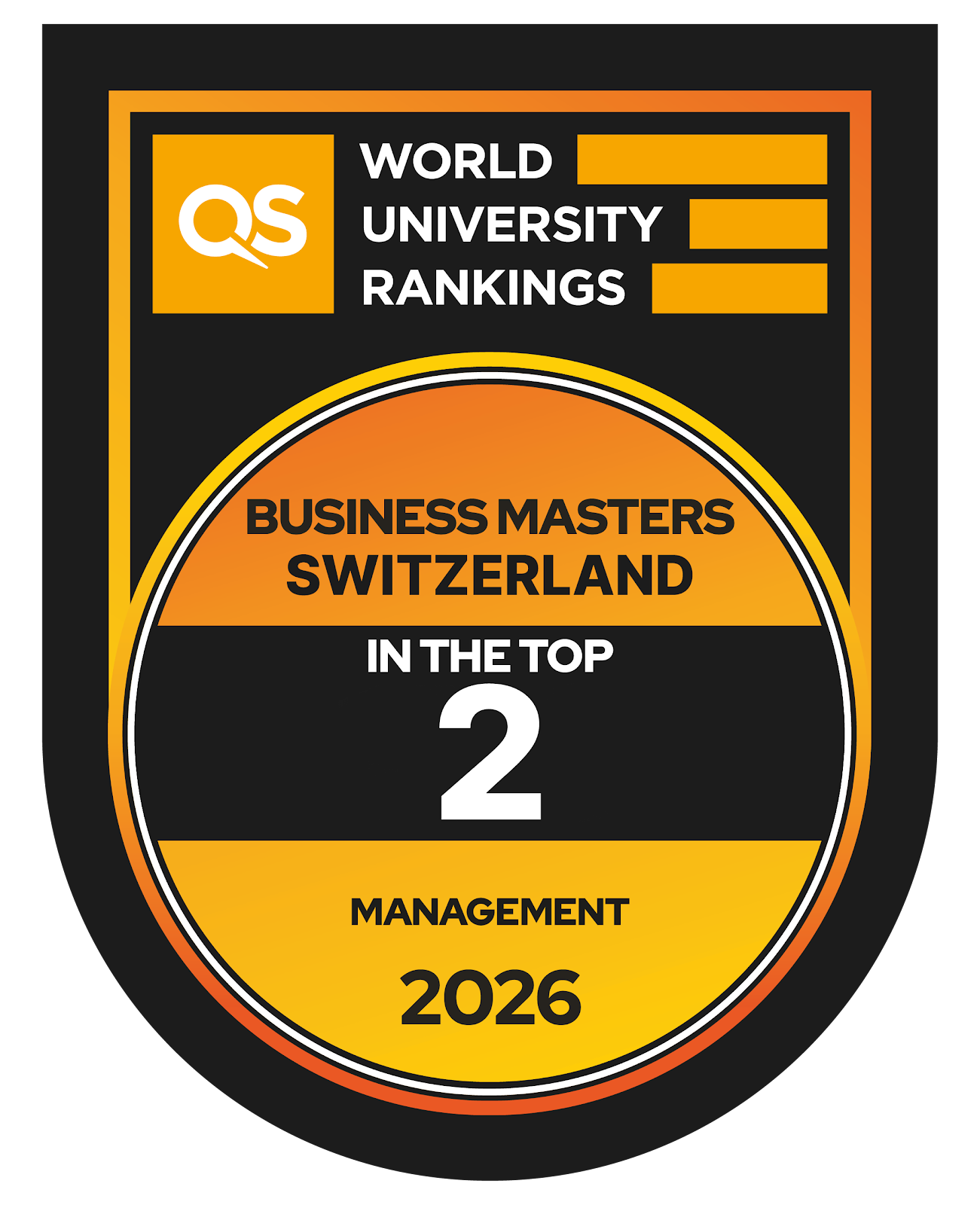
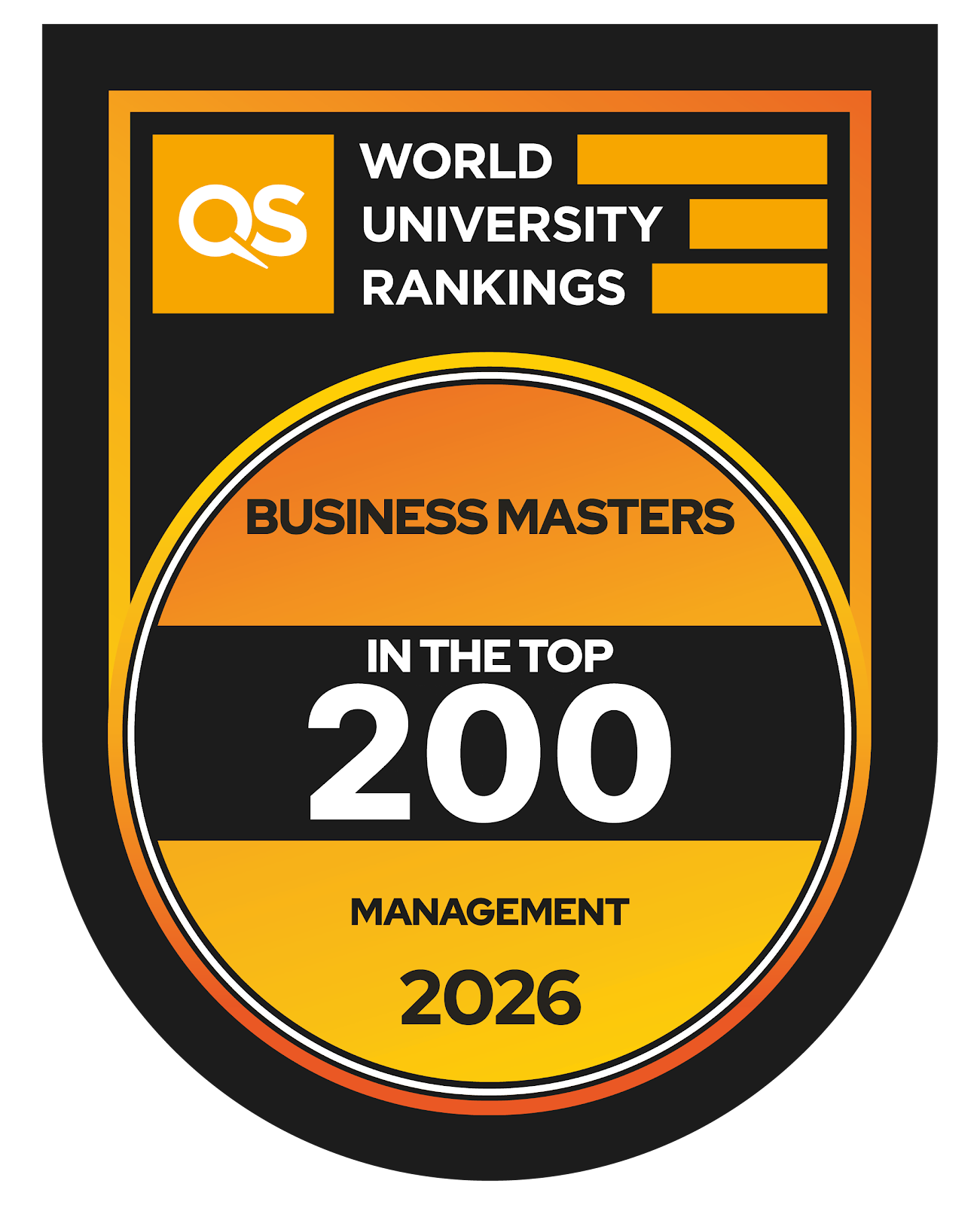
05 Recognition
Independently recognized, not self-declared.
Accreditation bodies and ranking institutions evaluate AUS on the same criteria applied to the world's leading business schools.
AUS equips its students pursuing a degree in international business with the knowledge, skills, and tools necessary to make a significant contribution to the development and success of any business organization. Through practice-oriented studies based on the application of scientific methods, research and development, AUS graduates will be prepared to become competent and confident leaders in the business world.
Vision
Our vision is to build a reputation as a prestigious and well-known private higher education institution in Switzerland that attracts students and faculty from all over the world.
07 Why AUS
Four reasons students choose AUS.
×
01
Dual Degrees
At the American Institute of Applied Sciences in Switzerland (AUS), students have the unique opportunity to earn a prestigious Dual Degree. This means graduating with two highly recognized qualifications: one from Switzerland and another from the United States. This global academic experience equips AUS graduates with a competitive edge, opening doors to international opportunities and careers worldwide.
02
Practical Approach
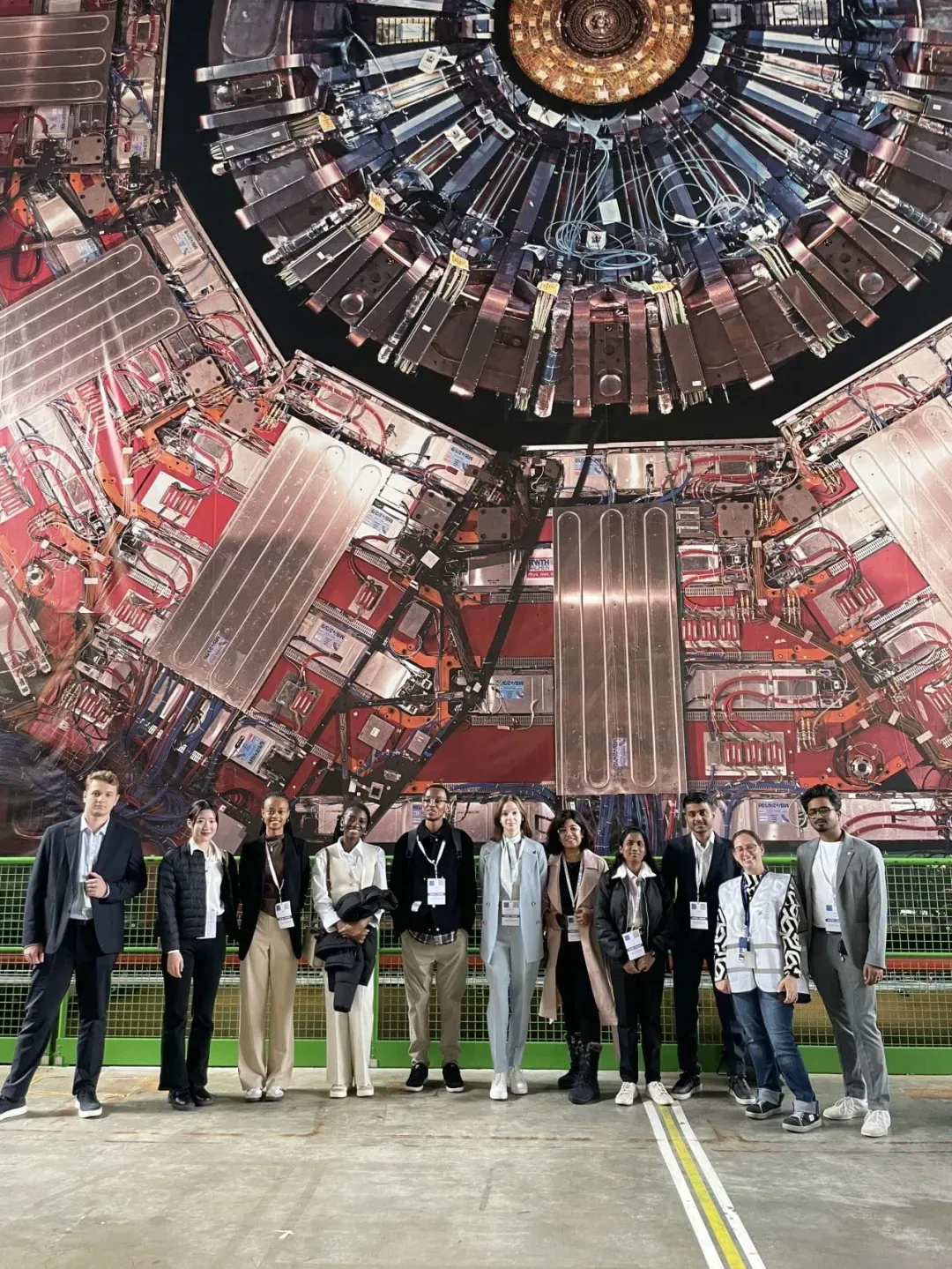
At AUS, we embrace active learning as the cornerstone of our approach. Through case studies, simulations, internships, and real-world projects, students bridge theory and practice, gaining a deep understanding of business concepts and the confidence to excel professionally.
03
Experiential Learning
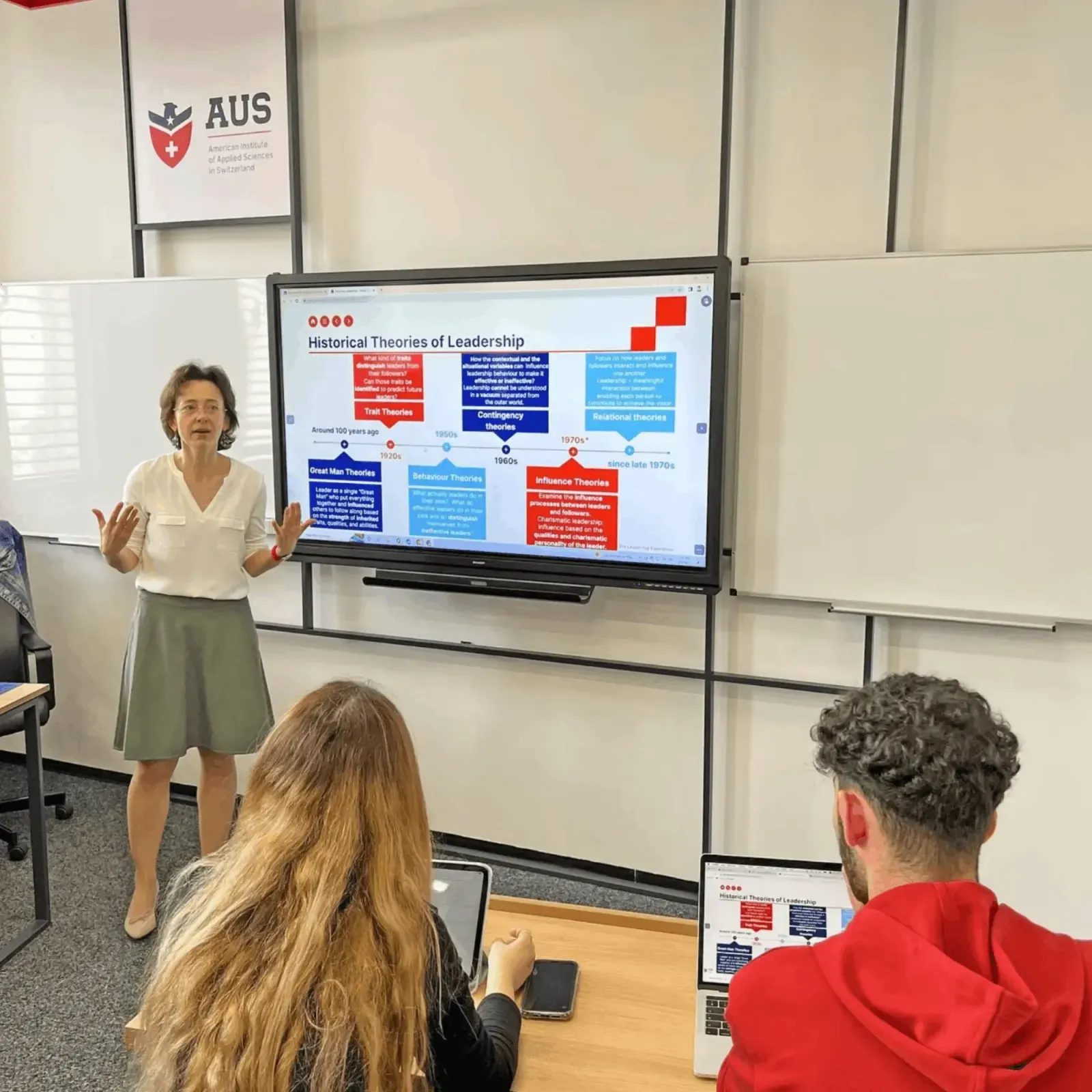
AUS offers personalized attention with small class sizes limited to 20 students, fostering collaboration. Our curriculum combines business theories with hands-on projects, encouraging real-world application. Through simulations, group projects, and industry visits, students develop problem-solving, strategic thinking, and leadership skills.
04
Professional Certifications
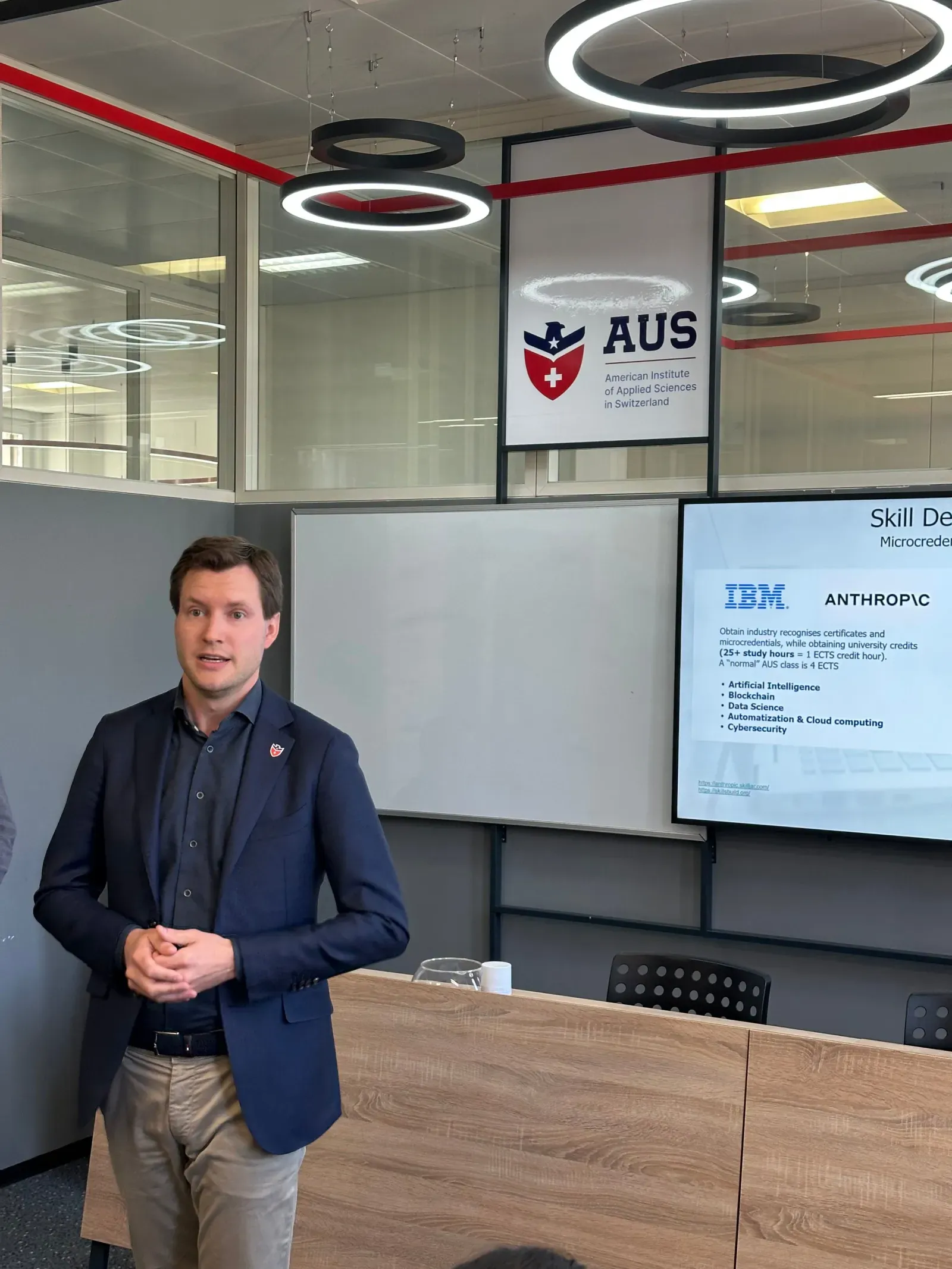
Collaborating with the IBM SkillsBuild Initiative, AUS enables students to earn professional certifications in high-demand fields like Artificial Intelligence, Cloud Computing, Data Science, and Security. Integrated into our experiential learning framework, these certifications ensure students not only learn but also apply their knowledge in practice.
08 Sustainability
Shaping responsible decision‑makers for sustainable development.
At AUS, sustainability is at the core of our mission. We are committed to integrating sustainability initiatives throughout our campus and embedding sustainable practices into our teaching methods.
By collaborating with various associations and non-profits, we actively integrate sustainability into our classrooms, ensuring that we provide future leaders with the skills needed to balance economic and sustainability goals while emphasizing the Sustainable Development Goals (SDGs). We equip our students with the understanding and ability to deliver meaningful change for a better tomorrow.
09 Learning from Experts
Local and international voices, inside the classroom.
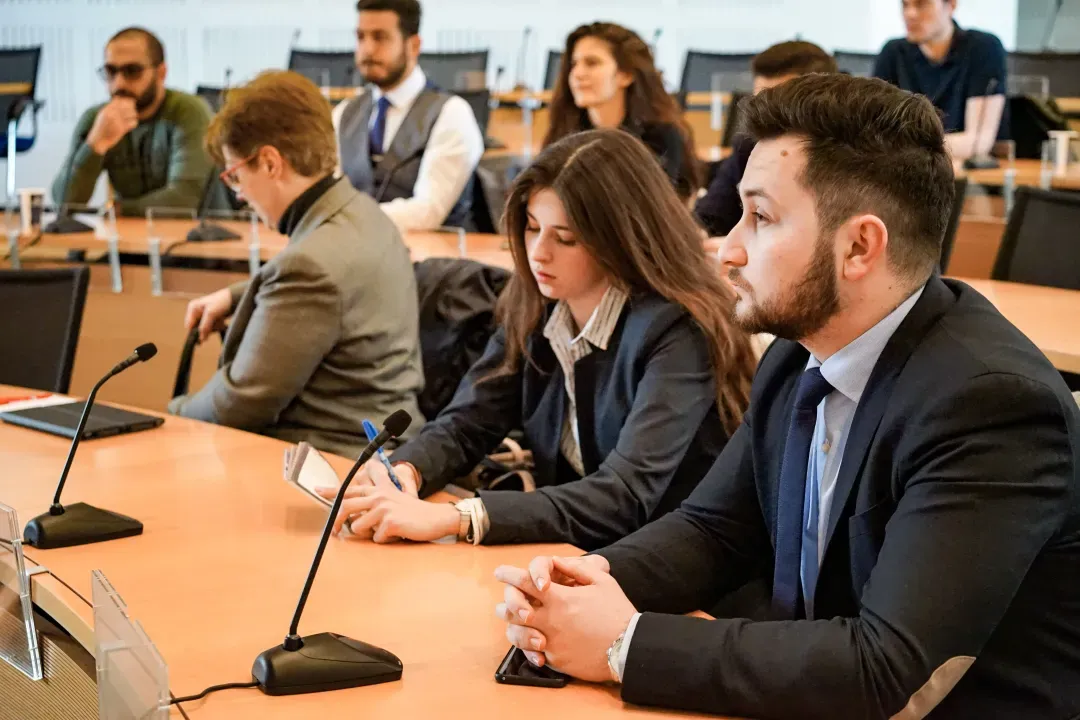
The Speaker Series brings practitioners into the room to bridge academic theory with what's actually happening in business today.
Insights from our faculty, students and partners — plus the events where you can meet AUS in person or online. Click any image to read the full story.
Blog
1 / 9
Events
1 / 2
Event
Bachelor and Master Info Sessions
Join our monthly Info Sessions, tailored separately for Bachelor’s and Master’s programs, and learn about our Dual Degrees, specializations, and what makes AUS unique. Connect with our team and current students to get an inside look at your future with us.
What’s on the agenda?
Information about studying in Switzerland
Institutional overview & campus and facilities tour
Discover the AUS degrees and specializations
Details on admission requirements and the application process
Student life, extracurricular activities and student services
Housing and campus living options
Career opportunities for graduates
Open Q&A with our admissions team
Event location: Online via Google Meet. Registration is open for the upcoming sessions.
Archived from aus.swiss — blog & events, November 2025.
Event
SSRM 2025 — Safety, Security & Risk Management
The 2nd edition of the international online conference and workshop on Safety, Security, and Risk Management invites scholars and professionals to meet, share insights, and advance practice and research in the field. Fully online, it offers a platform for global networking and knowledge exchange.
Papers are welcomed from engineers, lawyers, social and political scientists and other backgrounds, addressing health and safety policies in workplaces, training of crews and workers, insurance, safe products and infrastructure, environmental solutions, and contemporary social threats to stability and sustainability.
Programme
Workshop, 28 November 2025 — young researchers meet mentors in small groups, discuss their research projects and receive feedback.
Conference, 29 November 2025 — keynote presentations, research presentations, parallel sessions, meet-the-editors and other scientific events.
Keynote speakers
Prof. Dr. Naglaa Fathy El Dessouky · Mr. Hamza Nidaazzi · Prof. Pradip Kumar Mitra · Tomasz Balcerzak, PhD Eng. · Małgorzata Żmigrodzka, PhD · Dr. Rahimi A. Rahman · Dr. Vadym Mozgovoy
Registration for the conference opens online; the event is 100% online on 28–29 November 2025.
Archived from aus.swiss — blog & events, November 2025.
Blog
The AI revolution is over: now it’s about AI mastery
The hype around artificial intelligence has subsided, and what remains is the reality of integrating AI into daily life, business and industry. AI is no longer a buzzword — it’s an essential tool that has already reshaped how we work, communicate and live.
Moving beyond the hype
In 2025 the focus is on practicality, efficiency and actual results. AI mastery means integrating machine learning, natural language processing and automation into real-world applications — streamlining customer service, inventory management, data analysis and predictive maintenance.
AI in everyday business functions
Chatbots and virtual assistants make customer service more responsive. Predictive analytics and customer segmentation power personalized marketing. And across operations, AI improves demand forecasting and supply chain optimization.
Mastering AI in data analysis
Raw data is just noise until it is analyzed and interpreted properly. Machine learning algorithms sift through vast datasets in real time, uncovering patterns and predicting trends — letting employees focus on interpreting results and taking action.
An AI-first mindset, built on literacy and ethics
Mastering AI means weaving it into every department — from HR to finance to corporate strategy — and investing in training so the whole workforce understands it. As AI spreads, transparency, data privacy and bias-free algorithms become non-negotiable.
AI at AUS
AUS integrates AI across its curriculum: a course on emerging technologies explores key aspects of AI, alongside a dedicated blockchain course and an upcoming specialized course on AI for business. Students also learn to clean and present data with tools like Tableau, gaining skills that go beyond basic queries toward predictive analytics and machine learning.
Archived from aus.swiss — blog & events.
Blog
Business with integrity: rethinking business leadership through ethics
Ethics in business refers to the principles and standards that guide how companies behave — not just legally, but responsibly. It’s integrity in action: asking whether a decision is fair, who could be harmed or left behind, and whether the choice will still stand five years from now.
Real-life examples of ethics in action
A tech startup rejects a high-paying client whose model exploits user data, choosing to protect privacy and brand values.
A board includes employee and community representatives in a major decision about factory closures.
A CFO voluntarily reports a financial reporting error before it is discovered externally.
When ethics fails — Volkswagen
In 2015, Volkswagen used illegal software to cheat emissions tests in millions of vehicles. The result: over $30 billion in fines and recalls, damaged reputation, resignations at the highest levels, and lasting harm to trust. Short-term thinking and a culture where speaking up was discouraged were the root causes.
When ethics wins — Patagonia
Patagonia made ethics the foundation of its model: donating 1% of sales to environmental nonprofits, auditing its supply chain, and building a global brand on “don’t buy what you don’t need.” The lesson: ethics doesn’t hold a business back — it makes it resilient and admired.
How AUS builds ethical leaders
AUS treats ethics as lived practice, not theory. Students face high-stakes simulations with no easy answers, apply ethics as a lens across every course from accounting to blockchain, and learn how integrity strengthens strategy — stronger customer trust, better investor relationships, lower risk, higher engagement.
Because the future of business belongs to those who lead not just with intelligence, but with integrity.
Archived from aus.swiss — blog & events.
Blog
Switzerland: top industries in 2025 and how to stand out in each
The Swiss job market in 2025 is more competitive and specialized than ever. Knowing where the growth is and which skills employers seek is key — whether you are local or international.
Finance and accounting
Zurich and Geneva seek professionals skilled in regulations, ESG reporting and data-driven finance. Stand out by combining the AUS finance specialization with strong Excel skills, ESG literacy, and certifications such as CFA or ACCA.
Pharma and life sciences
Basel leads the pharmaceutical industry, with demand for R&D, compliance and biotech talent. Certifications like GMP, Lean Six Sigma or PMP position graduates for pharma operations and medical compliance roles.
IT and data analytics
AI, cybersecurity and business intelligence are in high demand. AUS’s data analytics specialization builds portfolios in Python, SQL and Tableau — and its strategic collaboration with IBM gives students access to exclusive IBM digital certifications in AI, cloud computing and business analytics.
Sustainability, green tech, tourism & hospitality
As Switzerland moves toward climate neutrality, ESG reporting, sustainable supply chains and clean energy roles grow. Tourism is rebounding with a digital and service-innovation push, valuing professionals who combine business, tech and experience design.
What employers really want in 2025
Swiss-recognized diplomas and certifications
Proficiency in English plus German or French
Digital fluency and real tool experience
A mindset of applied learning and growth
Archived from aus.swiss — blog & events.
Blog
SEO for AI: how to optimize content for AI search in 2025
Traditional keyword-focused SEO is being replaced by AI-driven search that prioritizes context, user intent and semantic meaning. Tools like Google SGE, ChatGPT and voice assistants are changing how websites are ranked and discovered — summarizing and recommending content instead of just listing links.
Create topic clusters that show depth and authority
Use schema markup to help AI interpret your content’s structure
Publish original insights backed by data and build authoritative backlinks
Structure content for AI readability
AI systems prefer logically organized, scannable content: clear labeled sections, bulleted lists, descriptive headings, supporting visuals, descriptive alt text and fresh examples.
Focus on voice and conversation
With Siri, Alexa and ChatGPT acting as everyday gateways to the web, content should mirror how people speak — answering natural-language queries directly, like “What is AI SEO in 2025?”
SEO for AI isn’t just about optimizing for Google — it’s about being understood, trusted and surfaced by intelligent systems. Invest in intent-based, useful content, structured formatting, and original insights that build trust and authority.
Archived from aus.swiss — blog & events.
Blog
FMOS 2025 Research Conference recap
Over 200 academics, practitioners and young researchers from more than 30 countries convened — in avatar form — in the Metaverse and via video streaming on 13–14 June 2025 for the 3rd edition of the FMOS Research Conference, organized by the American Institute of Applied Sciences in Switzerland.
An immersive Metaverse gathering
Participants navigated virtual auditoriums with real-time Q&A, networked in avatar-led lounges, and explored a dynamic poster hall — demonstrating how virtual environments democratize access, reduce travel emissions and foster global collaboration.
Program highlights
The two days integrated keynotes, professional showcases, Meet-the-Editor forums and parallel sessions around business sustainability. Impaxio unveiled its SMS and WhatsApp survey platform; editors from the Cureus Journal of Business & Economics (Springer Nature) shared tips for early-career scholars; and international researchers presented projects spanning green supply chains, VR tourism and blockchain-enabled microfinance.
Thematic hubs of inquiry
Research was organized into five hubs: Sustainable Tourism & Hospitality; Digital Transformation in Operations; Inclusive Finance & Marketing; Circular Economy & Risk Management; and Socio-Technical Perspectives.
Key takeaways
Cross-functional collaboration is non-negotiable for lasting sustainability innovations.
Technology — AI, blockchain, the Metaverse — is a strategic enabler reshaping sustainable business today.
Local context matters: effective solutions adapt to the social, regulatory and cultural landscapes they operate in.
FMOS concluded with a call for full-paper submissions and a teaser for upcoming AUS research events — SSRM 2025 in November and FMOS 2026.
Archived from aus.swiss — blog & events.
Blog
When regulations spark innovation: the impact of the EU’s TPO ban on the beauty industry
The EU has banned the chemical TPO (trimethylbenzoyl diphenylphosphine oxide) in cosmetics, effective 1 September 2025 — a regulation that also applies in Switzerland. TPO has long been used as a photoinitiator in semi-permanent nail polish and gel systems and is now classified as toxic to reproduction. From September onwards, all cosmetics containing TPO are illegal to sell or use.
Why this is difficult for the beauty industry
Business owners face three immediate challenges: identifying and removing non-compliant products, securing replacements that cure effectively under UV or LED lamps, and communicating the change to clients — on top of the financial loss of stock that can no longer be used.
How adaptability becomes the key
Regulations are not optional — the difference lies in how businesses respond. Owners who treat the ban as an opportunity build resilience: auditing stock quickly, working with reliable suppliers, sourcing TPO-free alternatives, and training staff to explain the change with professionalism and trust.
Problem solving and innovation in action
Some brands have already reformulated their gels with safer alternatives such as ethyl trimethylbenzoyl phenylphosphinate — maintaining performance without the same health risks — and are using compliance to differentiate themselves in a crowded market.
Practical steps for business owners
Check current inventory and list all products containing TPO.
Stop reordering old formulas and search for certified TPO-free lines.
Partner with suppliers offering transparent ingredient lists.
Train staff and prepare standard answers for client questions.
Communicate changes clearly — turning transparency into a marketing advantage.
Every regulation brings cost and disruption, but also opportunity. It is a living example of why AUS offers specializations such as Business Management and International Business — equipping leaders to turn disruption into strategy.
Archived from aus.swiss — blog & events.
Blog
Why is August 1st the Swiss National Day? The history behind Switzerland’s birthday
Every year on 1 August, people across Switzerland celebrate the country’s founding with fireworks, music and patriotic pride. The answer to why this date goes back over 700 years, to a historic agreement among three Alpine regions.
The origins: the Federal Charter of 1291
In the summer of 1291, leaders from the mountain cantons of Uri, Schwyz and Unterwalden signed a pact of mutual defense and cooperation — the Federal Charter (Bundesbrief) — widely regarded as the founding moment of the Swiss Confederation. After the death of King Rudolf I of Habsburg, they pledged to support one another and resist foreign domination: not a declaration of independence, but a promise of unity that laid the groundwork for Swiss direct democracy and federalism.
Why August 1st?
Historians believe the charter was signed in early August 1291, so 1 August was chosen as a symbolic date when the national holiday was conceived in the 19th century. The first large-scale celebration took place in 1891, during the 600th anniversary — and the date became an official public holiday only in 1994.
How it is celebrated
Bonfires and fireworks, flag displays across homes and public buildings, community speeches, concerts and food markets, and “brunch on the farm” events. Around La Tour-de-Peilz, Vevey and Montreux, lakeside celebrations offer fireworks over Lake Geneva, festival promenades and visits to Château de Chillon.
Swiss National Day is more than a public holiday — it’s a tribute to a country built on cooperation instead of conquest. Joyeuse fête nationale!
Archived from aus.swiss — blog & events.
Blog
Switzerland as an all-year destination: the Swiss Riviera in summer rivals ski resorts
When travellers think of Switzerland, snow-capped peaks and ski resorts often come to mind. Yet Switzerland is as much a summer destination as a winter one. At the end of August, the Swiss Riviera — stretching along Lake Geneva from Lausanne to Montreux — remains vibrant, with its mild microclimate, golden vineyards and lakeside life.
Alluring attractions along the Swiss Riviera
The Lavaux terraces, a UNESCO World Heritage site between Montreux and Lausanne, offer sweeping lake views and tastings of crisp Chasselas wines. The lakeshore is perfect for late-summer strolls, crowned by the iconic statue of Queen’s Freddie Mercury. In La Tour-de-Peilz, the Swiss Museum of Games displays over 10'000 games from across centuries in a castle by the lake. And with more than 2'500 miles of marked trails, Vaud invites hiking, cycling and tree-top rope parks well into autumn.
End-of-summer events in Swiss Romande
From the Murten Classics open-air festival (10–31 August) and the Lucerne Festival to the Tellspiele in Interlaken, kayaking and paddle boarding on the Montreux Riviera, NOX ORAE concerts in La Tour-de-Peilz (28–30 August) and the Clara Haskil International Piano Competition in Vevey (28 August–5 September) — the season stays alive.
Why Switzerland is an all-year destination
The end of August and early September bring a slower pace, lighter crowds and golden evening light over the vineyards — proof that Switzerland is not just about snowy winters, but offers lakeside culture, vineyard walks and vibrant festivals when the ski slopes rest.
Archived from aus.swiss — blog & events.
Blog
Success in sports and studies: how Ball Academy helps student-athletes thrive in Switzerland
Balancing competitive sports with academics is no easy feat — but for student-athletes like Nick Henry and David Gichohi, it’s a reality they live every day in Switzerland. Both are enrolled at the American Institute of Applied Sciences in Switzerland (AUS) while training and playing under the guidance of Ball Academy, founded by former professional basketball player Antoine Gillespie.
From training to triumph
While pursuing their degrees at AUS, Nick and David also play for Vevey Riviera Basket — the club where NBA veteran Thabo Sefolosha began his journey. Their team recently won the Swiss National Liga, reflecting not only their dedication but the training and mentorship they receive from Ball Academy.
What sets Ball Academy apart?
Ball Academy is a place where athletes develop their skills, mindset and discipline. It helps elite amateur athletes prepare for the next level, focusing on elite basketball training, personal development and mentorship, guidance for balancing academics and athletics, and the preparation of amateur athletes to become professionals.
Switzerland: a hub for sports and education
Training in Switzerland gives student-athletes access to world-class facilities and a global sports ecosystem — home to FIBA, UEFA and the IOC. That setting creates incredible opportunities, whether athletes want to go pro, build a career in sports business, or connect with the international sports community.
For students like Nick and David, combining serious training with academic studies at AUS is more than a balancing act — it’s a launchpad for well-rounded futures.
Archived from aus.swiss — blog & events.
QS Ranked — 5-Star Teaching
Your Future Starts at AUS
Swiss business education with dual degrees, small classes, and 96%+ graduate employment. Applications are open for January 2027.




%201.svg)
%201.svg)


 ×
×